
You hit the opener button on a fifteen-degree morning, and instead of the usual smooth rise, you hear a groan, maybe a sharp crack, and the door inches up before stalling halfway. Or it doesn't move at all — the opener motor just hums and strains against something you can't see. You get out of the car, walk over, and notice the bottom edge of the door is sitting in a thin sheet of ice that's bonded it to the garage floor. This is one of the most common cold-weather calls we get, and it almost always comes down to one of a handful of things, in a fairly predictable order.
The Symptoms Homeowners Notice First
Before anyone pulls out a wrench, here's what usually tips you off that winter has gotten into your garage door system:
- The door won't break free. The opener strains, clicks, or reverses itself as a safety response because it's meeting resistance it wasn't expecting.
- A loud pop or crack right as the door starts to lift — that's usually the ice seal at the bottom letting go.
- Visible ice or frost along the bottom weatherstripping where it meets the slab.
- General sluggishness even after the door frees itself — it moves slower than normal, or seems to labor more on the way up than the way down.
- Remote works, but the door barely budges, suggesting the opener itself isn't the problem — something mechanical downstream is.
Any one of these on its own might not mean much. Several together, especially after a hard freeze or a nor'easter that dumped snow and then let it melt and refreeze, point to a specific cause.
What a Technician Checks First: Ice at the Threshold
This is the most common culprit and the first thing worth ruling out. Snow melts off the door or tracks in off the floor during the day, pools at the bottom edge, and refreezes overnight into a thin sheet that glues the weatherstripping to the concrete. It's especially common in Metuchen's freeze-thaw pattern, where a sunny afternoon followed by a hard overnight freeze can happen several times in the same week.
The fix: Don't force the opener repeatedly — that's how you strip a gear or burn out a motor. Instead, use a plastic scraper or warm (not boiling) water to break the ice seal manually, then dry the area. For an ongoing fix, a bead of silicone-based garage door lubricant along the bottom seal before a freeze can keep it from bonding to the slab in the first place. If this keeps happening every winter, it's worth having the weatherstripping inspected — if it's cracked or compressed, it holds more water against the floor than a seal in good shape would.
Next: Thickened Lubricant on Tracks and Rollers
If there's no ice, or the door still drags after the ice is cleared, the next thing a technician checks is the hardware itself. Standard grease and old lubricant thicken in cold temperatures, which adds drag to every roller and hinge point. On a door that hasn't been serviced in a year or two, this alone can be enough to make the opener strain.
The fix: A full clean-and-lubricate of the tracks, rollers, hinges, and springs using a lubricant rated for cold weather — not household oil or WD-40, which attract dust and gum up over time. This is a core part of a seasonal maintenance visit and often resolves sluggishness on its own.
Then: Spring Tension Changes With the Cold
Steel springs lose a small amount of elasticity in very cold temperatures, which means they're providing slightly less lift assistance than they would in summer. On a door that was already borderline — springs nearing the end of their lifespan, or a heavier door like solid wood or insulated steel — that difference is enough to tip it from “working fine” to “straining every time.”
The fix: This is not a DIY adjustment. Torsion springs are under serious tension and adjusting or replacing them requires the right tools and training. A technician will check the balance of the door — disconnecting the opener and seeing whether the door stays put or falls when lifted by hand — and either adjust spring tension or recommend replacement if the springs are worn, rusted, or simply undersized for the door's weight. This is also the point where older homes with original hardware tend to show their age, since springs rated decades ago may not match the performance expected today.
After That: Opener Force Settings and Limit Switches
If the hardware is lubricated and the springs are balanced but the door still seems to fight the opener, the next check is the opener itself. Most openers have a force setting that determines how much resistance the motor will push through before it assumes something's wrong and reverses. Added winter drag from stiff hardware or a slightly tighter track can trip that safety limit even when nothing is actually broken.
The fix: A technician will test and recalibrate the force and limit settings so the opener is working with the door's actual winter resistance, not fighting it — without disabling the safety reverse feature, which should never be bypassed.
Last on the List: Worn Weatherstripping and Seals
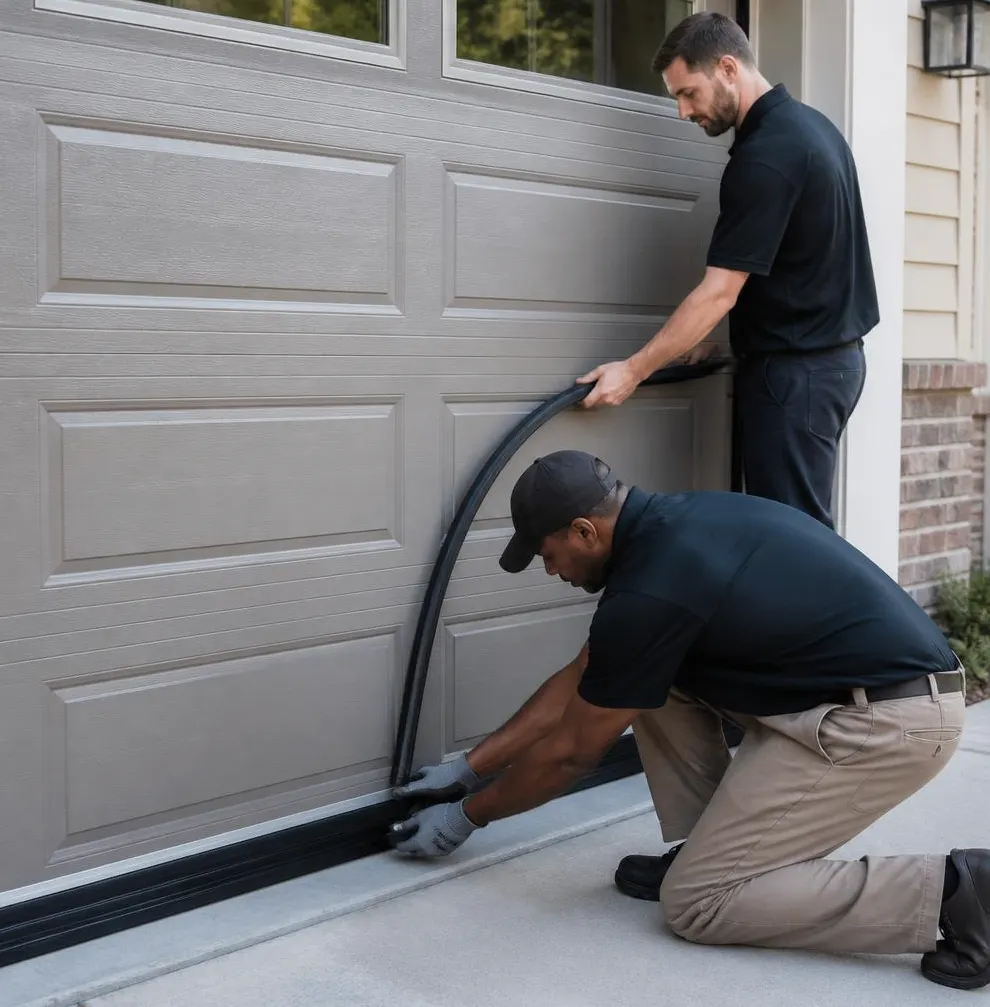
If everything above checks out and the door still seems to invite moisture and ice every winter, worn or shrunken weatherstripping is usually the root cause rather than a symptom. Older doors — common in this area's housing stock — often have original seals that have hardened and pulled away from the slab, letting in more water and cold air than they should.
The fix: Replacing the bottom seal and side weatherstripping is a relatively affordable fix, typically in the range of a couple hundred dollars installed depending on door size, and it cuts down on both ice bonding and energy loss through the garage.
When to Call Metuchen Garage Door
If you've cleared visible ice and the door is still straining, reversing, or making unfamiliar noises, it's time to call rather than keep testing the opener's patience. We offer garage door maintenance visits that cover lubrication, balance checks, and opener calibration before the worst of winter sets in, and spring replacement when tension or wear is the real issue. If a door is frozen shut and you need it moving today, our emergency garage door service covers exactly that kind of situation.
If your garage door is fighting you every cold morning, give Metuchen Garage Door a call. We serve Metuchen and the surrounding Middlesex County area, and we'll get it diagnosed and working right before the next freeze.